
Tamanu oil for scars is one of the most quietly requested skin-care searches in the natural beauty world — and its story begins on a tropical coastline. In Sri Lanka, the domba tree (Calophyllum inophyllum) grows along the southern and eastern shores, its round green fruits yielding one of the island’s most treasured traditional oils.
What Is Tamanu Oil?
Tamanu oil is cold-pressed from the kernels of the domba tree’s nuts — a thick, greenish-gold oil with a distinctive nutty, earthy aroma. In coastal Ceylon, tamanu oil was traditionally kept in every household — applied to dry or rough skin, worked into massage routines, and used as a daily skin-nourishing oil. The global natural-beauty world now knows it simply as “tamanu,” but in Ceylon it will always be domba-thel.
What Tamanu Oil Is Traditionally Used For
- Support the appearance of smooth, even-looking skin — a go-to for skin that has seen sun, weather, and time.
- Deeply nourish dry or rough skin — elbows, knees, heels, anywhere parched.
- Serve as a massage and ritual oil — worked into skin with slow, deliberate massage.
- Complement a natural glow — traditionally valued for supple, well-cared-for looking skin.
To be clear: no cosmetic oil can erase scars or heal damaged skin. What traditional use supports is the appearance of skin — smoothness, softness, even tone.
How to Use Tamanu Oil: The Skin Ritual
For Targeted Skin Care
- Start with clean skin. Wash and pat dry.
- Warm a few drops between your palms. 3–4 drops for a small area.
- Press, don’t rub. Press into skin, massage in slow circles until absorbed.
- Use evening for best results. Follow with sunscreen on sun-exposed areas in the morning.
- Be consistent. Daily ritual over weeks, not a one-off.
As a Body Oil
After a warm shower, smooth a thin layer over dry areas. The oil seals in moisture beautifully.
Tamanu in the Ebdepop Ritual Line
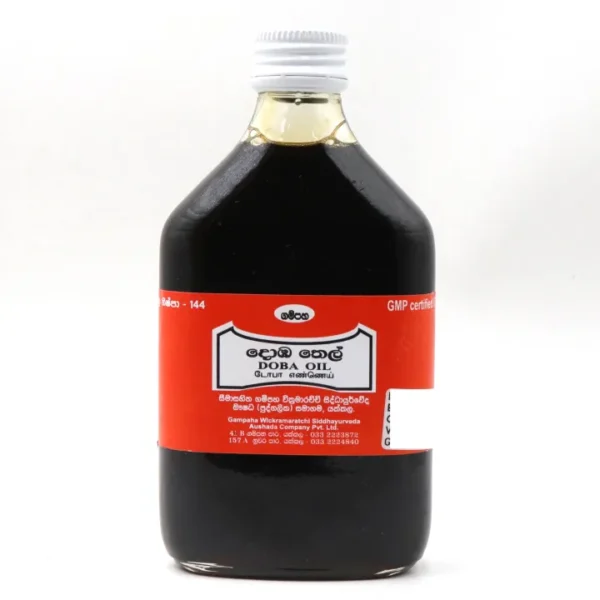
Domba-thel 180ml is prepared in the Wickramarachchi Ayurvedic tradition of Yakkala, Sri Lanka — a heritage of plant-based preparations dating back to 1929 — and bottled generously at 180ml. “Rooted in Ceylon. Crafted for the World.”
Frequently Asked Questions
Is tamanu oil good for the appearance of scars?
Traditionally used to support smooth, even-looking skin. No cosmetic oil can remove or heal scars.
Can I use tamanu oil on my face?
Yes — patch-test first, then 2–3 drops on clean skin in the evening. Best for normal to dry skin.
How long does tamanu oil take to show results?
Daily use over several weeks is the classic approach. Consistency and patience are key.
Does tamanu oil have a strong smell?
A distinctive earthy, nutty aroma — a sign of genuine, unrefined oil. It fades after absorption.
What is tamanu oil (domba-thel)?
Tamanu oil is cold-pressed from the kernels of the domba tree (Calophyllum inophyllum), which grows along Sri Lanka’s southern and eastern shores. It is a thick, greenish-gold oil with a distinctive nutty, earthy aroma — in Ceylon it has always been known as domba-thel, a traditional household skin oil.
Is tamanu oil good for the appearance of scars?
Tamanu oil is traditionally used to support the appearance of smooth, even-looking skin, and many people include it in their routine for areas of uneven texture. To be honest: no cosmetic oil can erase or heal scars — a premium skin oil should be judged on the appearance of skin: its smoothness, softness, and even tone.
Can you use tamanu oil on your face?
Yes — patch-test first, then apply 2–3 drops to clean skin in the evening. Its rich texture suits normal to dry skin best; if your skin is very oily, try it as a weekly treatment rather than a daily one.
How do you use tamanu oil for best results?
A little goes a long way: warm 3–4 drops between your palms, press (don’t rub) into clean skin, and use in the evening so it works undisturbed overnight. Traditional use is a daily ritual over weeks, not a one-off application.
Continue your ritual


[…] Tamanu Oil for Skin: Sri Lanka’s Coastal Beauty Secret […]